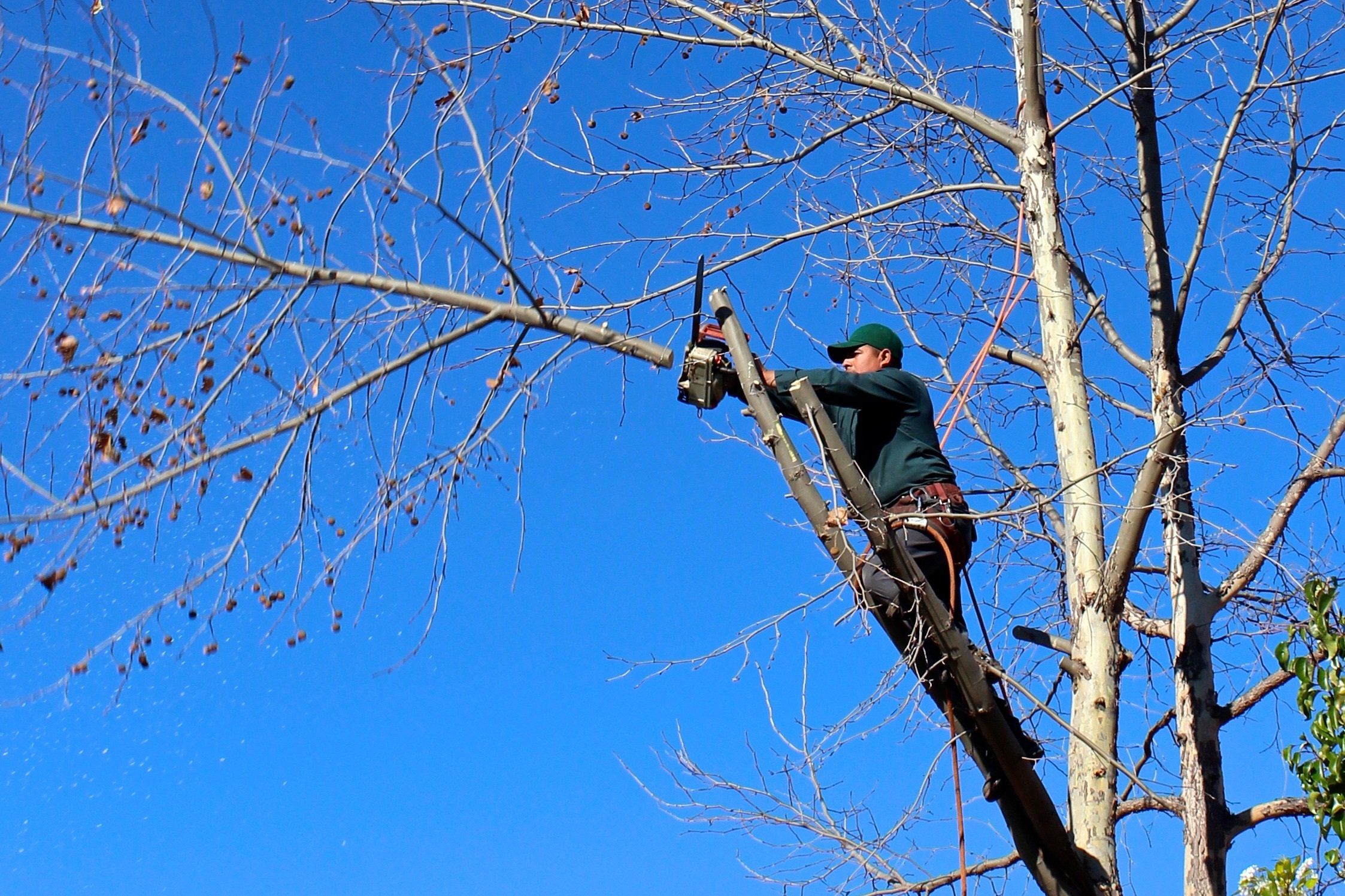
Every year, a significant number of serious injuries in the UK involve people attempting tree work at home. A chainsaw, a ladder and a YouTube tutorial feel like enough until they are not. This is not about scaremongering; it is about understanding what professional tree surgeons know that most homeowners do not, and using that knowledge to make sensible decisions about what to tackle yourself and what to hand over.
Why Tree Work Is More Dangerous Than It Looks
The risks in tree surgery are layered and not always obvious from the ground. The Arboricultural Association, the UK's leading professional body for tree care, emphasises that even routine-looking jobs carry significant hazards when attempted without proper training and equipment. A few things that catch people out:
- Tension in wood — a branch or trunk under tension can kick back unpredictably when cut. Professional arborists are trained to read how a tree is loaded and make cuts that release tension safely. Without that knowledge, the saw or the branch can move in ways that are difficult to anticipate.
- Working at height — even a relatively modest height of three or four metres is enough to cause life-changing injuries in a fall. Professionals use proper climbing equipment, rigging and ground support. A domestic ladder is not a substitute.
- Deadwood and decay — wood that looks solid can be structurally compromised. A branch that appears stable can fail suddenly under load or vibration from a saw.
- Falling debris — controlling where a branch or tree falls requires proper planning, rigging and an exclusion zone. In a garden setting with fences, sheds and neighbouring properties, the margin for error is very small.
What the Law Says
Some tree work has legal implications that homeowners are not always aware of. If a tree has a Tree Preservation Order (TPO) or sits within a Conservation Area, carrying out work without permission is a criminal offence carrying fines of up to £20,000. Companies like Epic Tree Care routinely check for TPOs and Conservation Area designations before any work begins as a standard part of the process. Doing it yourself without checking first is a risk that is simply not worth taking.
When to Always Call a Professional
Some jobs are reasonable for a confident, careful homeowner to attempt, such as light hedge trimming at ground level or removing small, accessible branches with hand tools. Beyond that, the calculus shifts quickly. Always bring in a qualified arborist for:
- Any work involving a chainsaw
- Work at height above a stepladder
- Trees near buildings, boundaries, power lines or roads
- Trees showing signs of disease, decay or structural weakness
- Any situation involving a TPO or Conservation Area
For homeowners in London and the South East, GraftinGardeners are a long-established firm of NPTC-qualified arborists who take a similarly cautious and compliance-focused approach to residential and commercial tree work.
How to Find Someone Qualified
Qualifications, insurance and accreditation are the three things to check when hiring any tree surgeon. NPTC City and Guilds certificates confirm practical competency. Public liability insurance of at least £5 million is standard for reputable firms. And membership of a recognised professional body provides an additional layer of accountability.
The Arboricultural Association's Find a Professional directory lists ARB Approved Contractors who have been independently assessed across all of these areas, making it the most reliable starting point when searching for a qualified arborist anywhere in the UK.
The Bottom Line
The cost of hiring a qualified tree surgeon is almost always less than people expect, and almost always less than the cost of getting it wrong. A serious injury, a damaged property or an enforcement notice for unpermitted work on a protected tree are all avoidable. Knowing where the line is between a job you can do and a job you should not is the most useful thing anyone working in their garden can understand.