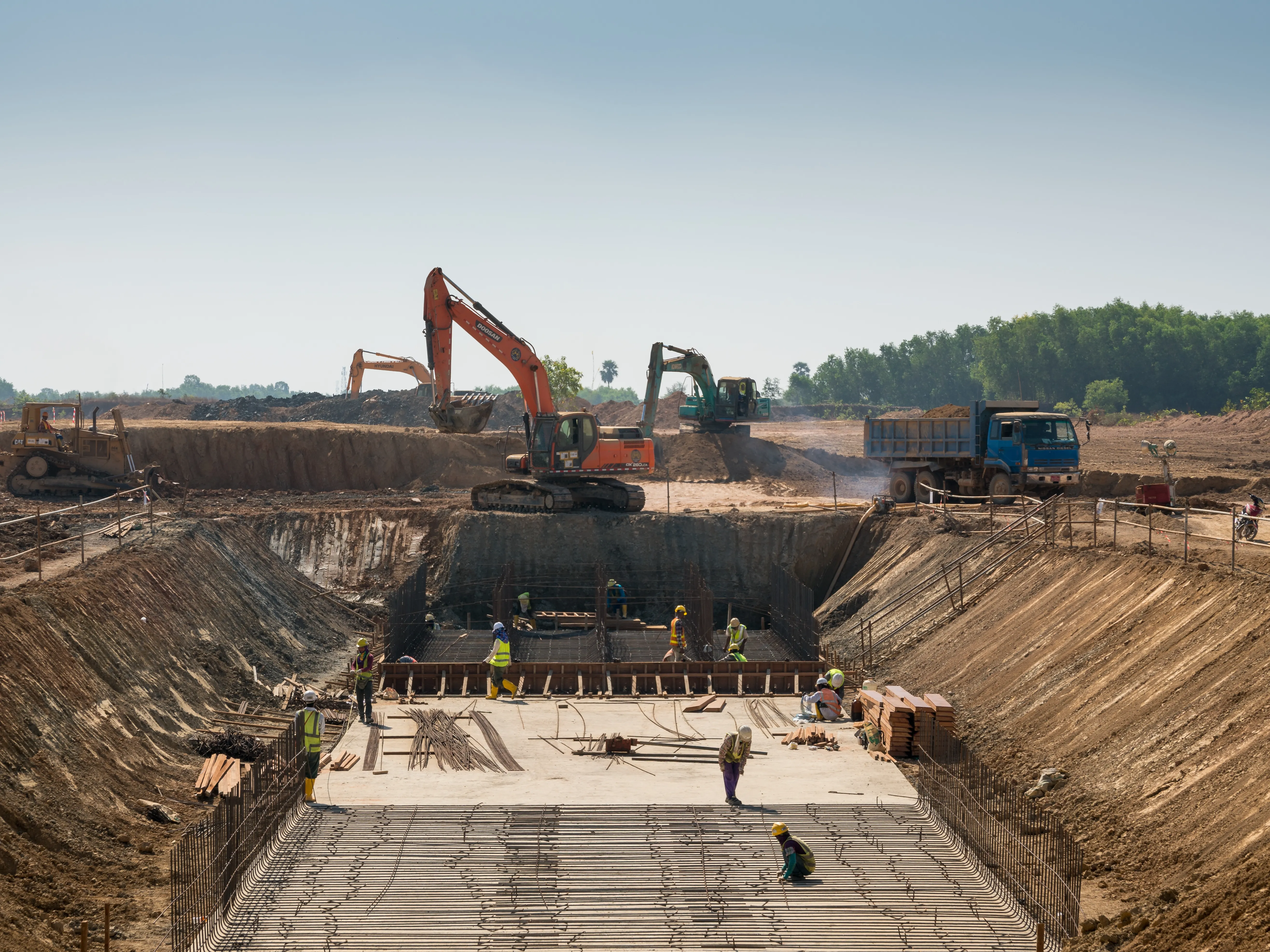
Liverpool has been building, demolishing, and rebuilding on the same ground for centuries. That history shows up under the surface in ways that catch out developers and contractors who don't do their homework. The British Geological Survey now offers a full 3D model of the geology beneath Liverpool and Warrington, and what it reveals goes a long way to explaining why foundation work in this city is rarely straightforward. Here are six reasons the ground conditions specifically demand specialist piling.
1. Layers of Made Ground From Decades of Industrial Use
Liverpool's docklands, industrial yards, and former factory sites have left behind thick layers of made ground: a mix of rubble, ash, demolition debris and backfilled material that bears no resemblance to natural soil. Standard foundation assumptions simply don't apply. Firms like Piletec Geotechnical deal specifically with this kind of layered and obstructed ground, where piling needs to punch through inconsistent fill to reach something reliable underneath.
2. Soft Alluvial Deposits Near the Mersey
The closer you build to the waterfront, the more likely you are to encounter soft, compressible alluvial soils laid down by the Mersey over thousands of years. These deposits can be metres deep, are prone to settlement under load, and offer very little bearing capacity without proper treatment. Geotechnical consultancies such as Northpoint Geotechnical regularly flag soft alluvium as one of the most common and most underestimated ground risks on waterfront and riverside sites across the UK.
3. Variable Sandstone Bedrock That Doesn't Follow a Straight Line
Underneath Liverpool's superficial deposits sits Triassic sandstone, but it doesn't sit at a consistent depth. Rockhead can vary dramatically across a single site, meaning one pile might hit rock at eight metres while the next hits it at twenty. Ground investigation ahead of any piling programme isn't optional here; it's the only way to avoid expensive surprises mid-project. Specialists like Dawson Foundation Engineering design specifically for this kind of variable rockhead, where pile depths need to be confirmed rather than assumed.
4. Tight Urban Sites and Restricted Access
Liverpool city centre doesn't give you much room to work with. Terraced streets, narrow yards, basement structures and proximity to neighbouring buildings mean that large conventional piling rigs often can't get close to where the work needs to happen. This is where an experienced Liverpool piling company like GeMech with a diverse fleet of equipment earns its money, particularly one that offers mini piling and restricted access solutions as a standard part of their offering rather than an afterthought.
5. Buried Infrastructure and Historic Voids
Beneath Liverpool's streets lies a tangle of Victorian-era infrastructure, old cellar systems, disused service tunnels and in some areas, remnants of wartime activity. Encountering an uncharted void mid-pile is the kind of problem that stops a programme dead. Ground engineering firms such as TechnikGS deal with exactly this scenario, designing foundation solutions that account for subsurface obstructions that don't show up on modern utility maps.
6. A Regeneration Boom That Isn't Slowing Down
Liverpool has been in an extended period of large-scale development across the waterfront, the city centre and the wider Merseyside area. That volume of construction on ground this complex means demand for specialist piling expertise is consistently high. Contractors like Burnside Plant operate nationally on exactly these kinds of driven and sheet pile programmes, reflecting how widespread the need for proper foundation work has become across major UK regeneration sites.
None of this means Liverpool is impossible to build on. It means going in without a proper ground investigation and a contractor who understands the local conditions is the kind of shortcut that tends to show up later, and at considerable cost.